

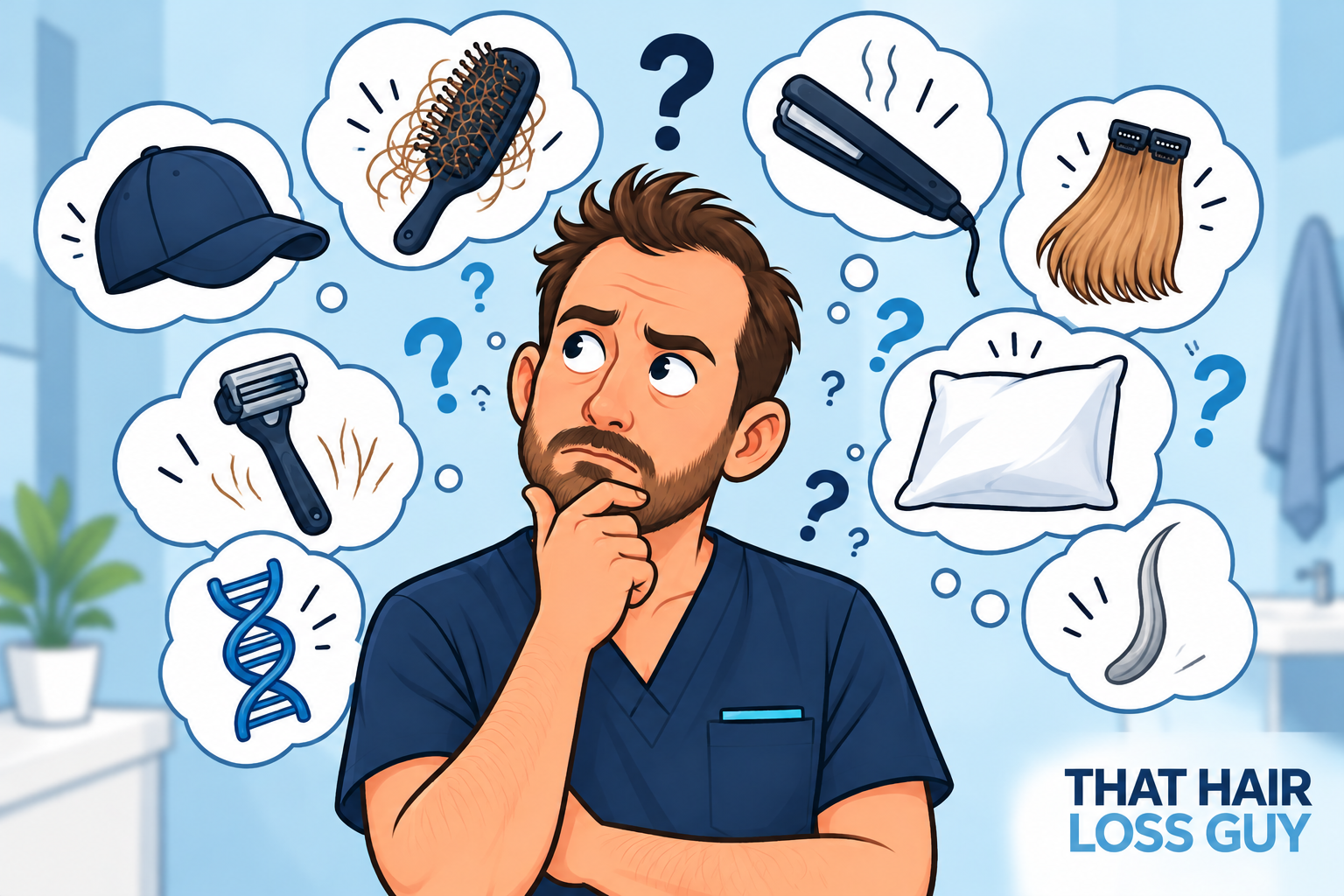
Hats, haircuts and hair straighteners — what's actually making your hair fall out, and what's just a load of old myths?
I'm Eamonn Henry, That Hair Loss Guy at MHR Belfast. If there's one thing I've learnt about hair loss, it's that one topic everyone seems to have an opinion. But when it comes to your hair, how do you separate what sounds convincing from what science actually tells us?
Let's put some familiar hair-loss claims to the test.
Myth 1: Wearing a hat makes you bald.
The Facts: Good news for hat lovers! Wearing an ordinary, well-fitting hat doesn't cause hereditary hair loss. Pattern hair loss is mainly influenced by genetics, hormones and age — not your favourite baseball cap.
However, headwear that repeatedly pulls on your hair or causes significant friction may contribute to hair damage in certain circumstances.
The Bottom Line: Wear the hat. Just don't expect it to be responsible for your receding hairline!
Myth 2: Washing your hair too often causes hair loss.
The Facts: There's no need to fear the shower! Washing your hair doesn't cause hereditary hair loss, although you may notice loose hairs coming away during washing. Often, these hairs were already in the shedding phase and would have fallen out anyway.
But avoiding washing altogether isn't the answer either. Washing too infrequently can allow oil, dead skin cells and product build-up to accumulate on your scalp, potentially causing irritation or worsening conditions such as dandruff.
How often you should wash depends on your hair type, scalp condition and lifestyle. The key is to keep your scalp clean while treating your hair gently. Avoid harsh scrubbing, rough towel-drying and aggressive brushing, which can contribute to breakage.
The Bottom Line: Wash your hair when it needs it! Neither washing too often nor avoiding the shampoo bottle is a magic solution to hair loss — a healthy scalp and gentle haircare are what matter.
Myth 3: Shaving your head makes your hair grow back thicker.
The Facts: Sorry, but the razor isn't a magic growth tool! Shaving cuts the hair at the surface and doesn't change the follicle beneath your skin. When the hair grows back, its blunt tip can make it feel coarser or look thicker initially, but shaving doesn't increase its actual thickness or growth rate.
The Bottom Line: A fresh buzz cut can change your look, but it won't turn a thinning hairline into a full head of hair.
Myth 4: Hair loss only comes from your mum's side of the family.
The Facts: This is one of the most persistent hair-loss myths. Genetics play an important role in hereditary pattern hair loss, but the genes involved can come from both sides of your family. Your wider family history may offer clues, but it can't predict your future hair with certainty.
The Bottom Line: You can't blame just one side of the family. When it comes to hair genetics, both sides can have a say!
Myth 5: Hair straighteners and colouring will make you go bald.
The Facts: Regularly using straighteners at high temperatures can weaken the hair shaft, causing dryness, split ends and breakage. Similarly, hair dyes and bleaching products can damage the hair if used incorrectly or too frequently. Some products can also irritate the scalp or trigger allergic reactions.
The important difference is that hair damage and hair loss aren't always the same thing. Heat styling and chemical treatments can cause breakage, making hair look thinner, but they don't usually cause hereditary hair loss. However, significant scalp irritation or damage can sometimes contribute to hair loss.
To protect your hair, keep straightener temperatures as low as practical, limit frequent bleaching, use heat protection products and avoid treatments that cause burning or irritation.
The Bottom Line: Love your colour and sleek styles? No problem! Just treat your hair with care — because looking after your locks is better than putting them through the wringer!
Myth 6: Hair extensions can cause bald patches.
The Facts: Hair extensions can put extra weight and tension on your natural hair, particularly if they're heavy, fitted tightly or worn continuously. Repeated pulling can cause a type of hair loss called traction alopecia. Early damage may improve if the tension stops, but prolonged traction can cause permanent hair loss.
Pain, tightness, broken hairs or thinning around the hairline are warning signs you shouldn't ignore.
The Bottom Line: Extensions shouldn't come at the expense of your natural hair. If they're pulling, hurting or causing thinning, it's time to reassess.
Myth 7: Hair shedding is the same all year round.
The Facts: Not necessarily! Research suggests that hair shedding can follow a seasonal pattern, with some people noticing more shedding during late summer and autumn. Some studies have found seasonal changes in the number of hairs in the resting phase, which may help explain why shedding can vary throughout the year. However, the evidence is limited, and patterns differ between people.
So, if you're finding a few more hairs in your brush as the seasons change, it doesn't automatically mean you're going bald. Seasonal shedding may be part of the picture.
However, don't blame every change on the weather! Persistent or excessive shedding, noticeable thinning or bald patches can have other causes and deserve proper attention.
The Bottom Line: Your hair might have its own seasonal timetable! A little extra shedding doesn't always mean trouble, but if it continues or your hair is visibly thinning, don't just wait for spring — get advice.
Myth 8: Stress can make you lose your hair.
The Facts: Unfortunately, stress can sometimes take its toll on your hair, too. Significant physical or emotional stress can trigger a type of temporary hair shedding called telogen effluvium.
Here's the tricky part: you might not notice the shedding until around two to three months after the stressful event. So, if you're suddenly finding more hair in your brush, the cause might not be what happened yesterday — it could be something your body went through a few months ago.
The good news is that stress-related shedding often improves once the trigger settles and the hair-growth cycle recovers. However, ongoing stress, other health conditions and nutritional deficiencies can also play a part, so persistent or excessive hair loss is worth discussing with your GP.
The Bottom Line: Stress might be messing with your head, but it can affect your hair, too! If your hair starts shedding more than usual, don't panic — focus on your wellbeing and get advice if it continues.
So, what should you believe about hair loss?
The biggest lesson is that hair loss has many possible causes, and the right solution depends on what's happening in the first place.
Genetics and age are common factors, but hair shedding can also be associated with stress, illness, hormonal changes, nutritional deficiencies and certain medications.
If you've noticed persistent thinning, excessive shedding, sudden bald patches or changes to your scalp, consider speaking to your GP or another appropriately qualified healthcare professional. They can help assess possible causes and whether further investigation or treatment is appropriate.
Be cautious of products promising overnight miracles, too. Some may improve the appearance or condition of your hair, but that doesn't necessarily mean they're treating the cause of hair loss. Supplements are most useful when addressing a genuine deficiency, and taking excessive amounts of certain nutrients can actually be harmful.
The Final Word from That Hair Loss Guy
When it comes to hair loss, it's easy to get caught up in the rumours, quick fixes and advice from people who swear they know the secret to a fuller head of hair.
But the truth is, understanding the cause is always a better starting point than chasing a miracle cure.
At MHR Belfast, we believe honest advice starts with understanding the problem. Whether you're noticing a receding hairline, thinning hair or increased shedding, getting the right information can help you make informed decisions about what to do next.
Until next time, don't believe the hype — get the facts before you lose your hair over it!
Further Reading & Useful Resources
Want to learn more about hair loss? These trusted resources offer reliable information to help you understand what's happening and explore your options.
NHS – Hair Loss — Learn about common causes, treatment options and when to speak to your GP.
American Academy of Dermatology – Hair Loss — Explore dermatologist advice on hair loss, haircare and available treatments.
If you're concerned about changes to your hair, seek professional advice rather than relying on online myths or products promising guaranteed results.