

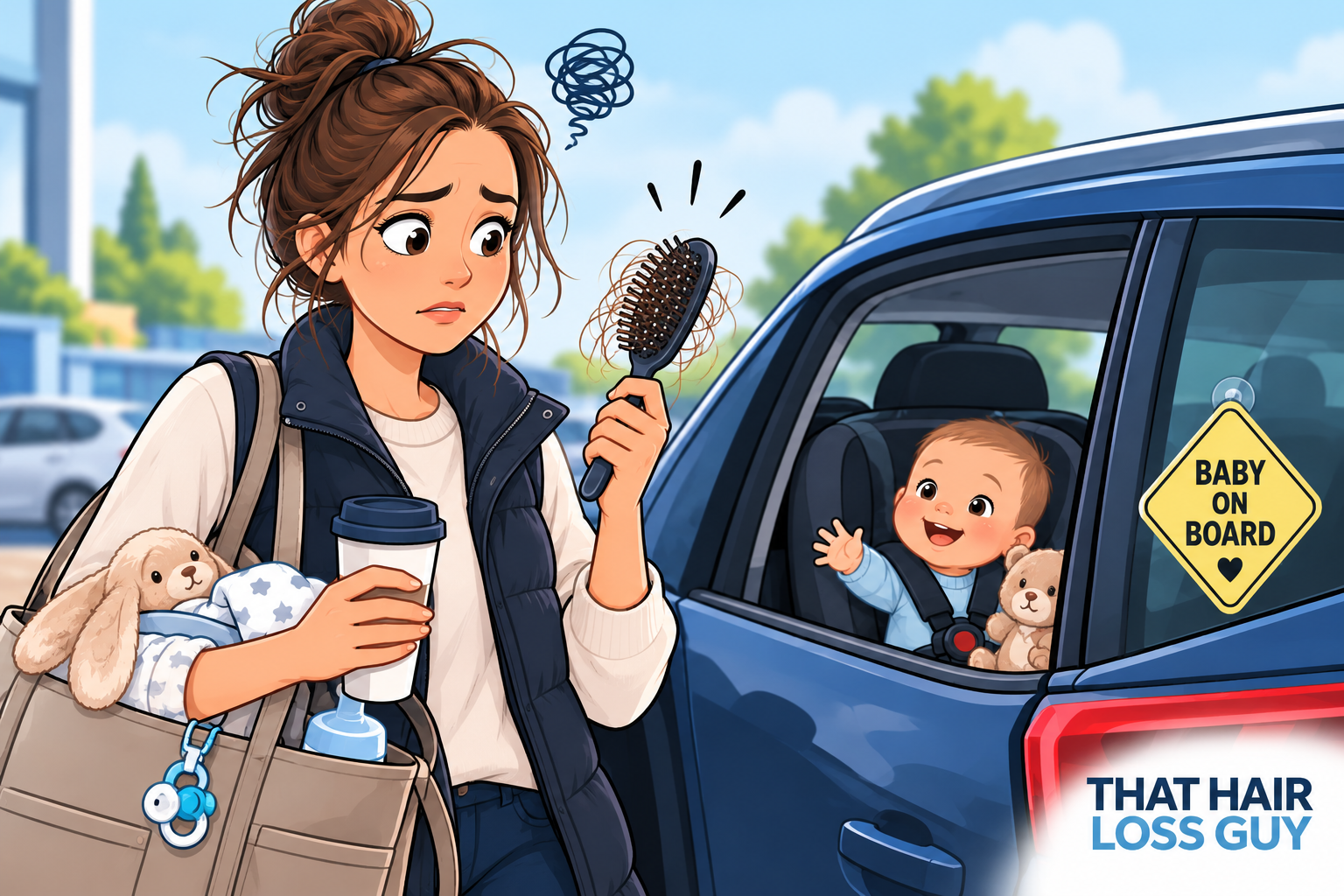
The baby’s here, the sleepless nights have begun… and suddenly, your hair seems to be making a dramatic exit.
I'm Eamonn Henry, That Hair Loss Guy at MHR Belfast. New motherhood comes with enough surprises, so finding handfuls of hair in your brush probably wasn't on the baby checklist! I'm here to explain why hair shedding can happen after pregnancy, what to expect as your body adjusts, and when it's worth looking into — with straightforward advice for mums who already have enough on their hands.
So let’s talk postpartum hair loss.
First comes the baby, then the nappies, night feeds and endless cups of coffee. Just when you think you've got enough on your plate, you notice more hair than usual in your brush or shower.
Brilliant. Just what you needed!
But is postpartum hair loss normal? Will your hair grow back? And is there anything you can do to help? Let's separate the facts from the fiction and get to the root of it.
Why is your hair shedding after pregnancy?
During pregnancy, higher oestrogen levels keep more hairs in their growing phase. That's one reason many women enjoy thicker-looking hair while expecting.
After giving birth, hormone levels change and more hairs enter the resting and shedding phases around the same time. The result is postpartum hair loss, also known as telogen effluvium.
It's a natural change in the hair-growth cycle and, in most cases, it's temporary.
When does postpartum hair loss start?
You might be enjoying those newborn cuddles when, a few months later, your hairbrush suddenly looks like it's auditioning for a hair transplant!
Postpartum hair shedding commonly becomes noticeable around two to four months after giving birth. You may notice more hair on your pillow, in the shower or wrapped around your hairbrush.
Some women experience mild shedding, while others notice a much more dramatic change, particularly around the hairline and temples.
The important thing to remember is that increased shedding doesn't automatically mean your hair follicles have stopped producing hair. In many cases, it's a temporary change in the hair-growth cycle.
Will my hair grow back?
In most cases, yes! Shedding often settles within around three to six months, although it can take longer for your hair to regain its previous fullness.
Many women find their hair has recovered considerably by their baby's first birthday. You might also notice short, wispy regrowth around your hairline — sometimes affectionately called “baby hairs”.
However, everyone's experience is different. If shedding is severe, continues without improvement or you notice bald patches, it's worth speaking to your GP to check whether something else could be contributing.
Is postpartum hair loss worse if you're breastfeeding?
This is a very common question, especially when you're already dealing with changing hormones and disrupted sleep.
Postpartum hair shedding is primarily linked to the hormonal changes that follow pregnancy, rather than breastfeeding itself. Breastfeeding affects hormone levels, but it doesn't mean you're destined to lose more hair.
Your recovery, nutrition, stress levels and general health can also influence how your hair behaves during this period.
So, don't feel you need to change how you feed your baby because of hair shedding. If you're concerned, speak to your GP or health visitor for advice tailored to you.
Can stress and lack of sleep make hair shedding worse?
Newborns don't exactly come with a guaranteed eight hours of sleep — and the adjustment can be exhausting!
Physical and emotional stress can sometimes contribute to temporary hair shedding. However, postpartum hair loss is commonly linked to hormonal changes after pregnancy, so don't blame yourself for being stressed or tired.
Try to eat regularly, stay hydrated and accept help where you can. Easier said than done with a newborn, we know! These steps support your general wellbeing, even though they won't instantly stop hormonal shedding.
If you're feeling unusually exhausted alongside hair loss, mention it to your GP. Iron deficiency and thyroid problems can also contribute to hair shedding and may need assessment.
What can you do to help your hair?
You don't need a complicated haircare routine when you're already juggling a newborn. A few simple steps can help protect your hair while it recovers.
Be gentle: Avoid tight ponytails, harsh brushing and excessive heat styling, which can contribute to breakage.
Eat well: Aim for a balanced diet with enough protein, iron and other essential nutrients.
Don't rush into supplements: They're not a guaranteed fix. Speak to your GP if you suspect a deficiency, and avoid taking high doses unnecessarily.
Give it time: Temporary postpartum shedding usually improves as the hair-growth cycle settles.
Look after yourself, too: Rest when you can and accept support where possible. You deserve care just as much as your little one does.
Remember, no shampoo or miracle product can instantly reverse hormonal shedding. Understanding the cause is much more useful than spending a fortune chasing quick fixes.
When should you seek advice?
Although postpartum hair loss is usually temporary, it's worth speaking to your GP if:
Your hair loss is severe or continues without improvement.
You develop distinct bald patches or noticeable scalp irritation.
You're experiencing unusual fatigue, palpitations or other new symptoms.
Your hair isn't recovering as expected.
Your GP can assess whether the shedding fits the usual postpartum pattern and whether investigations for issues such as iron deficiency or thyroid problems are appropriate.
Be cautious of expensive treatments promising instant results before you understand the cause. The right approach depends on what's happening, and not every product marketed for hair growth is proven to help.
The final word from That Hair Loss Guy
Having a baby brings plenty of changes, and finding extra hair everywhere can be another worry you really don't need. But postpartum hair loss is common, usually temporary and doesn't mean you've done anything wrong.
Be patient with yourself and your hair. If something doesn't seem right or your shedding isn't improving, your GP can help you work out whether anything else is going on.
At MHR Belfast, we believe good hair advice starts with understanding what's happening — not jumping to conclusions.
Until next time, be kind to yourself, give your hair time and enjoy the baby bubble and life with a new baby on board.
Further Reading & Useful Resources
Want to learn a little more about postpartum hair loss? These trusted resources offer further information and advice.