

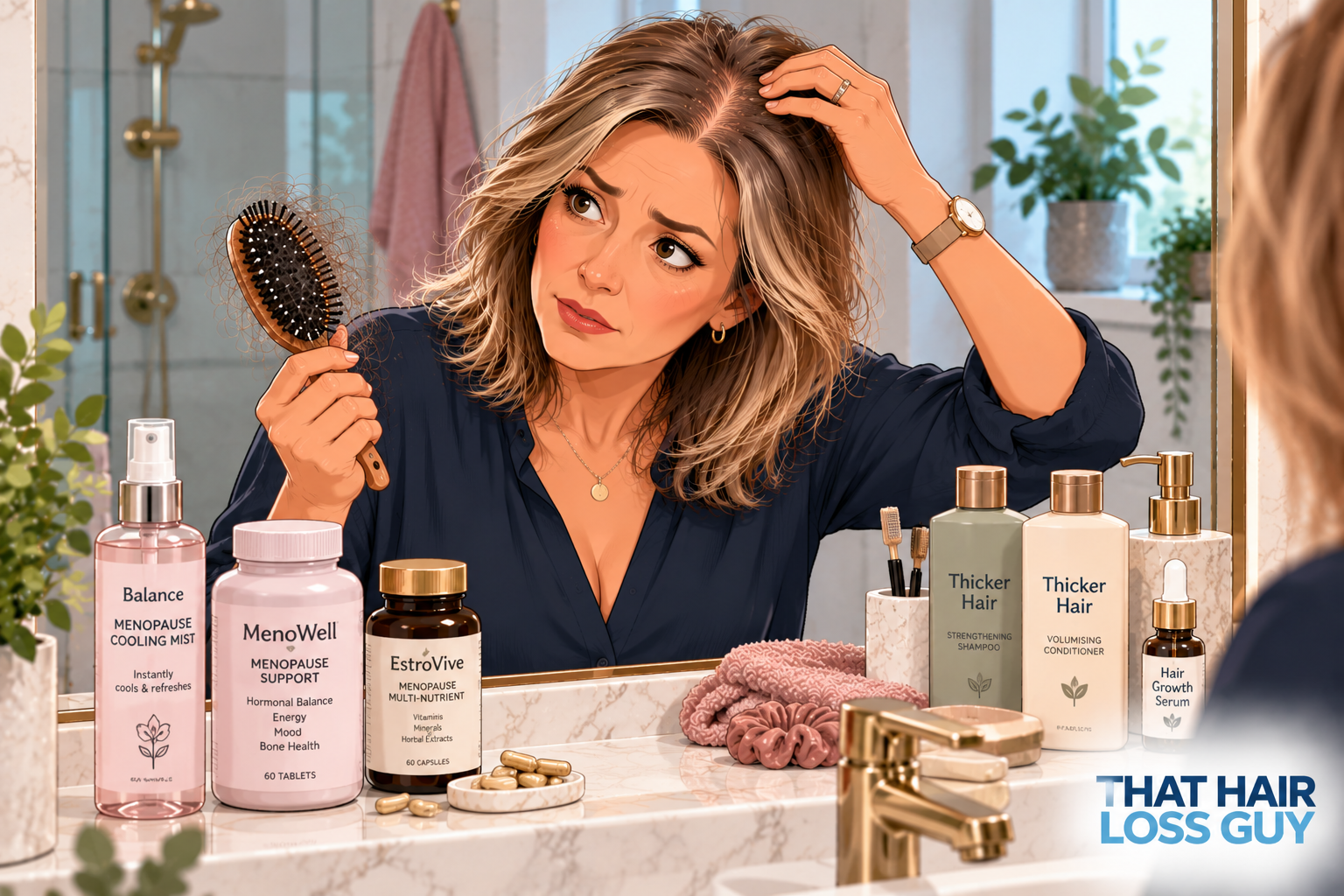
Hot flushes, changing moods and disrupted sleep… and now your hair seems to be thinning, too? Let’s get to the root of menopause-related hair loss, what causes it and what you can do about it.
I'm Eamonn Henry, That Hair Loss Guy at MHR Belfast. When it comes to menopause and hair loss, there's plenty of advice out there, but not all of it tells the full story. I'm here to help you understand the changes your hair may be going through, what's normal, and what you can do about it — without the guesswork or the gimmicks.
Maybe your parting looks wider than it used to, your ponytail feels thinner, or you're noticing more hair coming away in the shower. If any of this sounds familiar, you're certainly not alone.
Hormonal changes during menopause can affect your hair, but they're not necessarily the whole story. So, let's get to the root of what's happening, what may help and when it's worth seeking advice.
Why Can Menopause Affect Your Hair?
During perimenopause and menopause, levels of oestrogen and progesterone fluctuate and eventually decline. These hormones are involved in various processes throughout the body, including the hair growth cycle.
As hormone levels change, some women notice that their hair:
Feels finer or less full than before.
Becomes thinner around the parting or crown.
Loses some of its volume and bounce.
Seems to grow more slowly.
Becomes drier, more fragile or harder to style.
One possible cause is female pattern hair loss, which can become more noticeable around midlife. It often develops gradually, with widening of the parting and reduced density across the top of the scalp.
However, menopause doesn't automatically mean you'll experience significant hair loss. Everyone's experience is different, and there may be other factors involved.
Is It Menopause or Something Else?
This is where things get interesting. Although menopause can contribute to hair changes, it isn't always the only explanation.
Other factors that can affect hair growth include:
Low iron levels: Iron deficiency can contribute to hair shedding, particularly in women who have experienced heavy periods.
Thyroid problems: An underactive or overactive thyroid can affect the hair growth cycle.
Stress: Significant emotional or physical stress can trigger a type of temporary shedding called telogen effluvium. The shedding may not become noticeable until a couple of months after the trigger.
Nutritional deficiencies: Not getting enough of certain nutrients can affect hair health. However, taking supplements you don't need isn't necessarily helpful.
Genetics: Your inherited tendency towards female pattern hair loss can influence whether you develop thinning and how it progresses.
Medications and other health conditions: Some medicines and medical conditions can contribute to shedding.
The important thing to remember? Don't automatically blame every change on menopause. If your hair is noticeably thinning or shedding more than usual, it's worth investigating the cause rather than guessing.
Will My Hair Grow Back After Menopause?
The answer depends on what's causing the change.
If your shedding is temporary and linked to a trigger such as stress, illness or a nutritional deficiency, your hair may recover once the underlying issue is addressed. Regrowth takes time, though, and it can take several months before you notice a difference.
Female pattern hair loss is different. It tends to progress gradually and may need ongoing treatment to help maintain or improve hair density.
You may not return to exactly the same thickness you had in your twenties, but that doesn't mean nothing can be done.
The sooner you understand what's causing the thinning, the sooner you can make informed decisions about your options.
What Can You Do to Help Your Hair?
You can't control every hormonal change, but there are practical steps you can take to support your hair and scalp.
1. Look After Your Scalp
Keep your scalp clean and use products suited to your hair type. If you experience itching, persistent flaking, redness or irritation, seek advice rather than simply switching shampoos repeatedly.
A healthy scalp is important, but remember that shampoo alone won't reverse hereditary hair loss.
2. Be Gentle With Your Hair
Frequent high-temperature styling, harsh bleaching and tight hairstyles can contribute to breakage or traction-related hair loss.
Try to:
Reduce excessive heat styling.
Avoid hairstyles that constantly pull on your hair.
Brush gently, particularly when your hair is wet.
Limit chemical treatments if your hair is becoming fragile.
You don't need to abandon your favourite hairstyle. Just give your hair a little extra care.
3. Eat a Balanced Diet
Hair needs adequate energy, protein and nutrients to grow normally. Aim for a varied, balanced diet rather than relying on supplements as a quick fix.
If you're experiencing persistent shedding, your GP may recommend blood tests to check for possible contributors such as iron deficiency or thyroid problems.
Only take supplements when appropriate for your needs, and get advice before using high-dose products.
4. Explore Evidence-Based Treatments
Depending on the diagnosis, treatments may be available to help manage hair loss. treatments may be considered depending on the cause, your medical history and whether you are taking other medication.
At MHR Belfast, we can discuss hair restoration options and help you understand what may be suitable for your situation. The first step is understanding the type and extent of hair loss rather than jumping straight into a treatment.
Be cautious of products promising instant regrowth or guaranteed results. Hair growth takes time.
When Should You Seek Advice?
A professional can assess possible causes and advise whether tests or treatment are needed.
You don't have to wait until your hair loss becomes severe before asking for help.
Your hair is thinning noticeably or shedding excessively.
You develop bald patches or sudden hair loss.
Your scalp is painful, inflamed or persistently irritated.
You also experience unusual fatigue, changes in weight or other symptoms that could suggest an underlying health issue.
Your hair loss continues or worsens despite making changes to your haircare routine.
The Final Word from That Hair Loss Guy
Menopause can bring plenty of changes, and noticing your hair thinning can be another frustrating one to add to the list. But don't automatically assume that your hair is destined to become thinner and stay that way.
Hormonal changes can play a part, but other factors — including low iron, thyroid problems and certain nutritional deficiencies — can also contribute to hair loss. Understanding the cause is the best starting point for deciding what to do next.
At MHR Belfast, we believe in honest advice, realistic expectations and helping you understand your options. If your hair is changing, you don't have to simply put up with it or waste money chasing miracle cures.
Until next time, look after yourself, look after your hair, and remember — you deserve to feel good at every stage of life!
Further Reading & Useful Resources
NHS – Hair loss
British Association of Dermatologists – Patient information leaflets
American Academy of Dermatology – Hair loss: diagnosis and treatment
This article is for general information and is not a substitute for individual medical advice.