

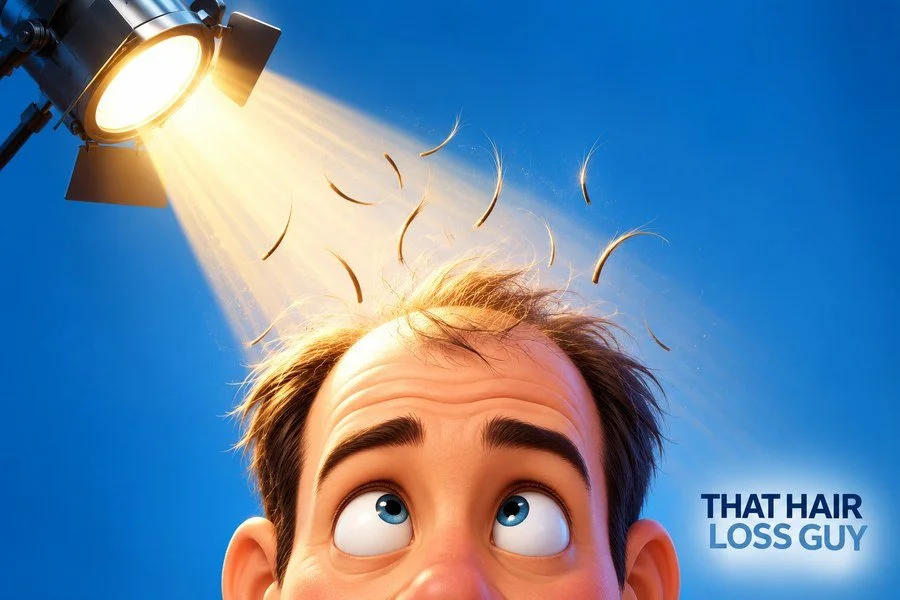
When shedding isn't just a phase — here's what you need to know.
I'm Eamonn Henry, That Hair Loss Guy at MHR Belfast. My aim is to help you understand why your hair might be shedding, what's normal and when it might be time to seek advice — so you can get to the root of the problem without the worry.
Finding more hair than usual? Let's get to the root of it.
There's hair in the shower. Hair on your hairbrush. Hair on your favourite jumper. And somehow, there's always one on your phone screen. How does that even happen?
If you've started noticing more hair lying around than usual, it's easy to jump to conclusions. One minute you're cleaning the hairbrush; the next, you're down an internet rabbit hole convinced you're going bald.
Before you panic, let's shed a little light on the subject.
Because here's the thing: losing hair every day is completely normal. Noticing a change in how much you're losing is worth paying attention to.
Let's look at what's happening, why shedding can increase and when it might be time to investigate.
How much hair shedding is normal? Or how much shedding is too much?
First, some reassurance. Most people shed around 50–100 hairs a day as part of the normal hair growth cycle.
Your hair doesn't all grow at the same time. Each strand goes through different stages: growing, resting and eventually shedding to make way for new growth.
Think of it as a continuous cycle of renewal. Some hairs leave the party, while others are just getting started.
And if you've got long or dark hair, those strands might be much more noticeable in the shower or on your clothes. That doesn't automatically mean you're shedding more than someone with shorter hair.
The important thing isn't counting every strand. It's noticing whether there's a clear change from what's normal for you.
Nobody needs to spend their evening counting hairs over the bathroom sink. There are better ways to spend your time!
Why am I suddenly shedding more hair?
If you've noticed a definite increase in shedding, there can be several reasons. Sometimes the trigger is obvious; other times, it takes a little detective work.
Stress and major life events
Stress can affect the hair growth cycle. Following a significant period of physical or emotional stress, some people experience a type of temporary shedding called telogen effluvium.
The tricky part? The shedding often starts around two to three months after the triggering event.
So, the stressful period you experienced in the summer might be showing up in your hair this autumn. Hair has its own timetable, and unfortunately, it doesn't always send you a calendar invitation.
Illness or surgery
A significant illness, particularly one involving a high fever, or recovering from surgery can disrupt the hair growth cycle.
Increased shedding may become noticeable weeks or months afterwards, even when you're feeling much better.
Weight loss and nutritional changes
Rapid weight loss, restrictive dieting, weight loss injections and not getting enough nutrients can contribute to increased shedding.
Hair needs adequate nutrition, including protein, to grow normally. Iron deficiency can also be associated with hair loss.
Hormonal changes
Hormonal changes, including those following childbirth or stopping certain hormonal treatments, can trigger increased shedding.
Hormones can also play a role in other forms of hair thinning, so the pattern and history of your hair loss matter when working out what's happening.
Medication changes and underlying health conditions
Some medicines can contribute to hair loss, and conditions such as thyroid problems may also affect your hair.
If the shedding started after beginning a new medicine or changing a dose, speak to your GP or prescribing clinician. Don't stop prescribed medication without medical advice.
And remember, sometimes there's no obvious trigger. That's frustrating, but it doesn't mean you've missed something or done anything wrong.
Is shedding the same as going bald?
Not necessarily — and this is an important distinction.
Excessive shedding often means more hairs than usual are entering the shedding phase. With telogen effluvium, for example, the shedding is generally spread across the scalp, and the hair may feel less full overall.
Pattern hair loss, on the other hand, tends to develop gradually. You might notice a receding hairline, thinning around the crown, a wider parting or a gradual reduction in overall density.
The two can sometimes occur together, which is why it isn't always possible to work out the cause, just by looking at the hairbrush.
Other types of hair loss can cause distinct bald patches or affect the scalp in different ways.
So, if you're seeing more hair in the shower, it doesn't automatically mean you're going bald. Equally, don't assume that every change is temporary shedding.
The aim is to understand the cause rather than guess.
Will my hair grow back?
This is the big question asked at almost every consultation.
When increased shedding is caused by temporary telogen effluvium, the outlook is often good. Once the underlying trigger has passed or been addressed, shedding generally settles, and new growth can follow.
However, patience is needed.
Shedding may continue for several months, and regaining your usual hair volume can take longer. Hair doesn't grow back overnight — despite what some online adverts might have you believe!
Other forms of hair loss can behave differently and may need specific treatment or ongoing management.
That's why identifying the cause matters. There's no single treatment that works for every type of hair loss, and buying a cupboard full of supplements or treatments without understanding the problem isn't necessarily the answer.
When should you get your hair shedding checked?
You don't need to wait until the situation becomes severe. At MHR Belfast, our free, no-obligation consultations are perfect to get that little bit of reassurance and support.
It's particularly important to seek advice if you notice:
Sudden or significant hair loss.
Bald patches or hair coming out in clumps.
Persistent or worsening shedding.
An itchy, painful, inflamed or burning scalp.
Other symptoms alongside your hair loss, or changes that are affecting your wellbeing.
Please don't feel you have to work out the diagnosis yourself. That's what proper assessment is for.
What can you do in the meantime?
While you're working out what's behind the shedding, there are a few sensible steps you can take:
Be gentle with your hair. Avoid excessive brushing, styling or colouring, tight hairstyles and unnecessary pulling or tension.
Eat a balanced diet. Make sure you're getting adequate protein and a range of nutrients. Avoid crash diets.
Think back a few months. Have you been ill, experienced significant stress, lost weight or changed medication? This information can help.
Be cautious with supplements. More isn't always better. Supplements are most useful when there's a genuine nutritional need, and high doses of certain nutrients can be harmful.
Don't rush into treatment. Different causes need different approaches. Understand what's happening and if it feels right for you.
And if you're concerned, get advice sooner rather than endlessly searching online. Dr Google and Dr Chat GPT can be useful for information, but they aren’t so great at examining your scalp!
A final word from That Hair Loss Guy
Hair shedding can happen for lots of reasons. Sometimes it's temporary; sometimes it's a sign that something needs investigating. The key is understanding what's happening rather than jumping to conclusions.
At MHR Belfast, we believe people deserve honest advice, clear explanations and the chance to understand their options without pressure. And if your hair loss needs medical investigation, getting the right assessment comes first.
Remember, every strand has its own life cycle. The trick is knowing when it's simply doing its thing and when there's more to the story.
Until next time, keep calm and carry on — a little shedding isn't always cause for alarm!
Want to read more?
For additional reliable information, take a look at:
British Association of Dermatologists' guide to telogen effluvium.
This article is for general information and does not replace medical advice. If you're experiencing hair loss, speak to your GP or prescribing clinician to help establish the cause and decide on appropriate treatment.