

Hair Loss: Where To Begin When Your Hair Starts To Thin?
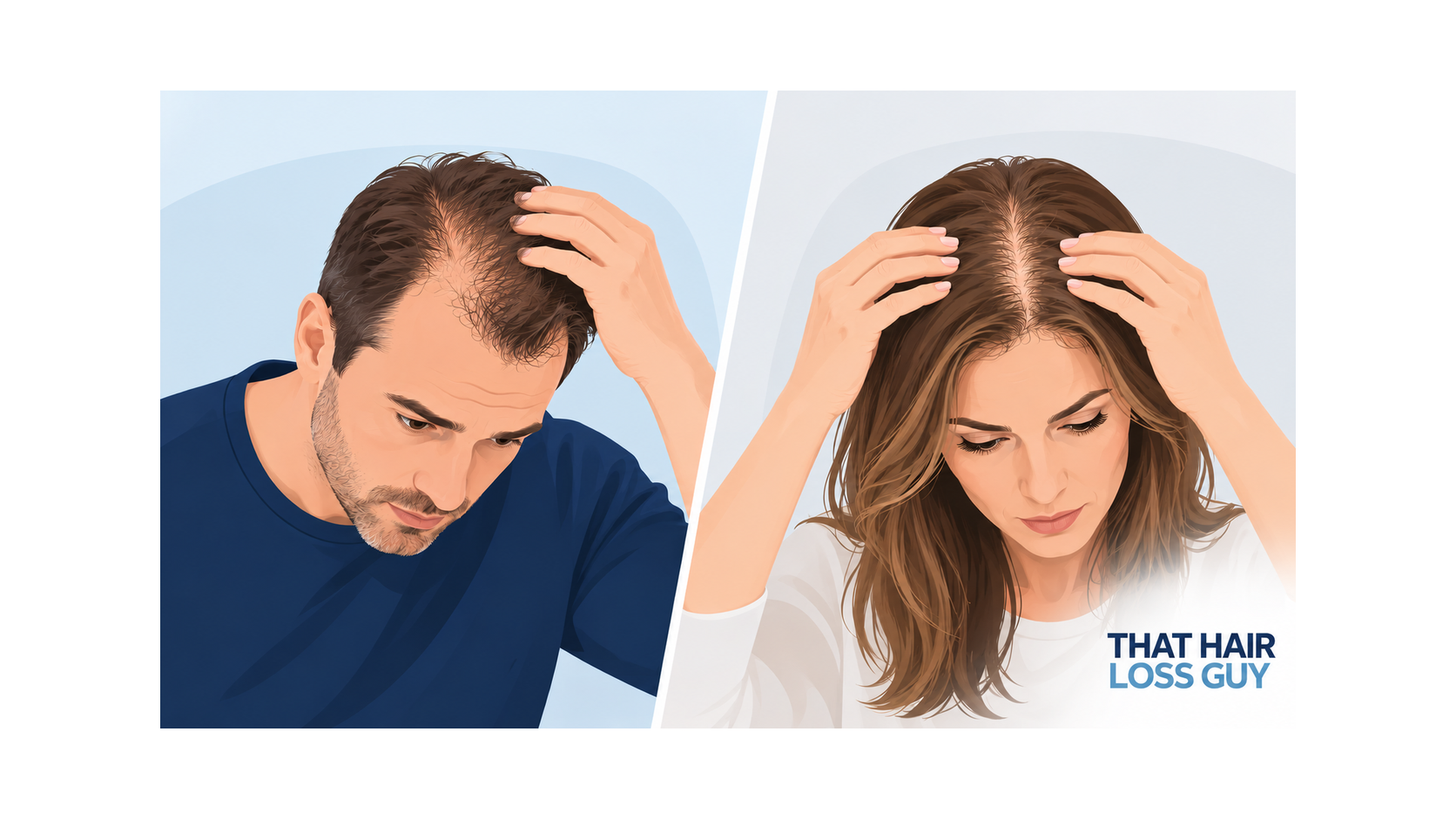
Noticing hair thinning can be worrying and knowing where to turn for advice isn't always easy.
I'm Eamonn Henry, That Hair Loss Guy at MHR Belfast. My aim is to make hair loss easier to understand, so you can explore your options without feeling pressured.
First, don't panic!
You might notice more hair coming out in the shower, a receding hairline, or your scalp becoming more visible in photographs. Whatever the first sign, it's natural to have questions.
Hair thinning can happen for several reasons, so it's worth understanding what may be causing it before rushing into treatments or spending money on products.
What could be causing your hair loss?
There isn't just one cause. Hereditary hair loss is common, but stress, illness, hormonal changes and certain nutritional deficiencies can also contribute to hair shedding or thinning.
Different causes can require different approaches. If your hair loss is sudden, patchy, accompanied by scalp irritation, or comes with other unexplained symptoms, please reach out and MHR Belfast will be able to guide you.
Is hair loss always permanent?
Not necessarily. Some types of hair loss are temporary, while others are progressive. Whether hair grows back depends on the underlying cause and other individual factors.
If you're unsure why your hair is changing, getting appropriate advice is a sensible first step rather than trying lots of products and hoping something works.
When should you seek advice?
If you've noticed gradual changes, it can help to keep track of what's happening. Look at where the thinning is occurring and whether it seems to be progressing.
Don't ignore sudden or patchy hair loss, scalp pain or irritation, or other symptoms that concern you. MHR Belfast can help assess possible causes and advise whether further investigation is needed.
What are your options?
There isn't one solution that suits everyone.
Depending on the cause and extent of your hair loss, options may include medical treatments or cosmetic approaches such as hair systems and hair restoration procedures.
A hair transplant isn't right for everyone. Suitability depends on factors including the type and progression of hair loss, donor hair availability and quality and your expectations. It's important to understand the benefits and limitations before making a decision.
At MHR Belfast, we provide information about different hair restoration services. Taking time to understand your concerns and what matters to you is a useful starting point.
Can you do anything about thinning hair?
There may be ways to manage hair loss, but be cautious of products promising guaranteed results or dramatic regrowth for everyone.
A good approach starts with understanding the likely cause, looking at reliable information and seeking professional, expert advice where appropriate.
What works for one person may not be suitable for another.
A final word from That Hair Loss Guy
Noticed your hair thinning? Take a beat.
You don't need to become a hair detective, a dermatologist or a hair surgeon overnight — and you definitely don't need to believe everything Dr Google or Dr Chat GPT tells you!
The best place to start is understanding what's happening, asking the right questions and exploring your options without rushing into anything. And that is where MHR Belfast genuinely can help.
Remember, everyone's hair story is different. What works for one person might not be right for another, and getting to the root (pardon the pun!) of the problem is always a good first step.
So, keep your head up, don't jump to conclusions, and whatever you do… don't lose your head over losing your hair!
Until next time…